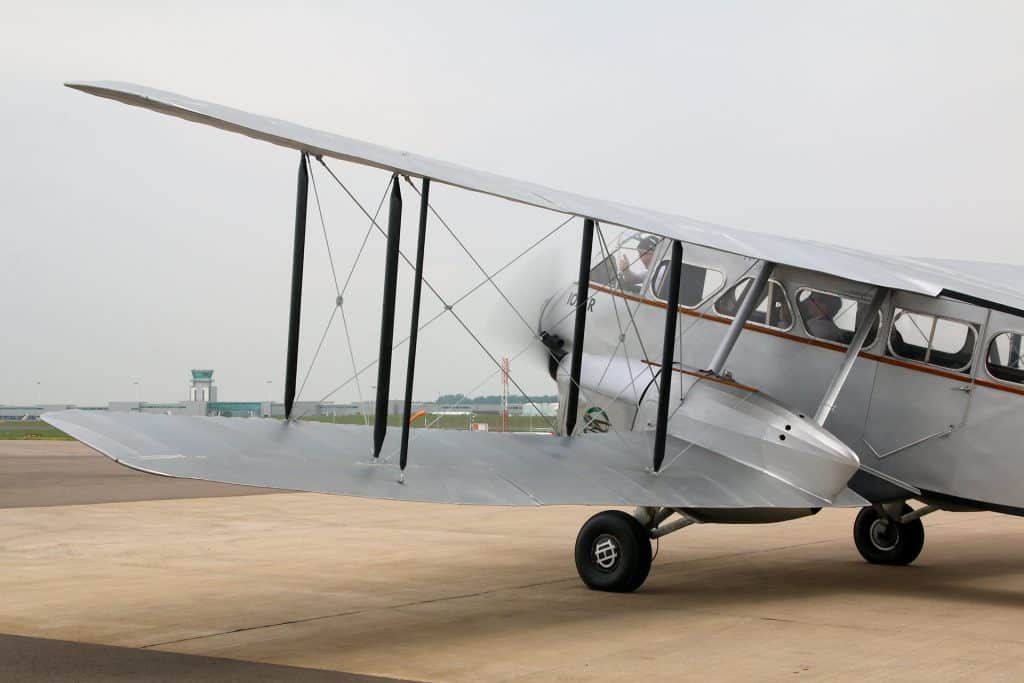
Aer Lingus is marking 90 years of connecting family, friends and businesses in the South West with Ireland, as it unveils its newly restored “Iolar” aircraft.
Today’s flight from Dublin to Bristol Airport was a special voyage for the Iolar, as it recreated Aer Lingus’ inaugural flight, which took place 90 years ago on 27 May 1936.
Back in 1936, Aer Lingus had just one aircraft and its inaugural route from Baldonnel, just outside of Dublin, to Bristol Airport had a flight time of around three hours. Today the average journey is just over an hour and is one of more than 100 routes from Ireland to the UK, Europe and North America.
When the route first started Aer Lingus operated once a day, reuniting family and friends, whereas now it flies up to three times a day. The Dublin to Bristol route is the second most used service at Bristol Airport with one of the highest numbers of inbound passengers, cementing the importance of this connection for both business and pleasure. Since 2022, Aer Lingus Regional, operated exclusively by Emerald Airlines, has flown over 10,000 flights between Bristol-Dublin and Bristol-Cork, carrying over 550,000 passengers.
Among those welcoming the flight were representatives from the Department of Foreign Affairs Ireland, North Somerset MP Sadik Al Hassan and Bristol City Councillor Paula O’Rourke. Also present were Chief Executive at Bristol Airport Dave Lees, Aer Lingus COO Adrian Dunne, and CEO for West of England Irish Paul Kelly. The aircraft was flown by Captain Brendan Burton who was accompanied by Captain Mark Dolan from the Aer Lingus Trust, who were involved in the restoration.
Dave Lees, Chief Executive, Bristol Airport, said:
“It’s wonderful to celebrate 90 years of flying with Aer Lingus. It’s such a special day, as Bristol was the very first route for Aer Lingus before it expanded to serve London and the North of England, so it’s fitting to see this beautifully restored aircraft take to the skies again over Bristol where its journey began. Over the years this route has provided, and continues to provide, vital links for inward business investment, as well as making it easy for family and friends to see each other.”
The lolar was also welcomed by 83-year-old Rosemary Collins who was an air hostess for Aer Lingus during the 1960s. She served on the Aviation Traders ATL-98 Carvair aircraft which was an unique aeroplane as it could carry up to five cars in the nose of the aircraft along with passengers. She made the trip over from her home in Dublin to see the iconic aircraft take to the skies again.
Rosemary commented:
“It was really special to see lolar flying again. I loved my job and always enjoyed flying between Dublin and Bristol in a day. I fondly remember the 6ft vertical ladder that the pilots used to enter the cockpit because I had to climb it too, carrying a meal tray and coffees for the skipper and co-pilot! Looking back, I smile while remembering wearing my hair in beehive to ensure I passed the strict minimum 5ft 2” height restrictions for cabin crew.”
EI-ABI, known as Iolar (Irish for eagle), is a rare de Havilland DH.84 Dragon, which dates back to 1936. It is designed to carry one pilot and six passengers and comfortably cruises at approximately 110 mph. Notably, it can carry 80% its own weight, an impressive achievement for its era that rivals the efficiency seen in modern commercial aircraft.
The de Havilland DH.84 Dragon Iolar is one of the last remaining aircrafts of its type and represents Ireland’s rich and storied aviation history. The Iolar was Aer Lingus’ first aircraft and operated for two years with the newly formed Irish airline, before it was sold as the airline expanded. It was later lost during World War II. Today’s Iolar is a sister aircraft to the original, which was welcomed into the Aer Lingus fleet in the 1960s. Now re-registered as EI-ABI Iolar, the aircraft remains an enduring symbol of Aer Lingus’ heritage.
The aircraft had been proudly on display in Aer Lingus’ maintenance headquarters at Dublin Airport in recent years, with preparations to return the aircraft to its former glory commencing ahead of Aer Lingus’ 90th anniversary. The four-month restoration, carried out by Midland Aviation at Abbeyshrule Aerodrome in County Longford, was supported by a dedicated group of Aer Lingus volunteers.
The skilled team combined archival research, engineering expertise and traditional craftsmanship to restore the aircraft, while preserving its structural integrity and historical authenticity. The restoration work included maintenance and certification checks, including full top overhauls of both engines and careful cosmetic restoration of the airframe, with the skills of one of Ireland’s last aviation carpenters playing a vital role in preserving the aircraft’s authenticity.
Adrian Dunne, Chief Operations Officer, Aer Lingus, said:
“Today’s flight to Bristol is a proud moment, reconnecting us with the very beginnings of our airline.
“I am incredibly proud of the dedication and expertise shown by our colleagues and partners in bringing Iolar back to life, preserving an important piece of our history for future generations.”
This project has been supported by the Aer Lingus Charitable Foundation, reflecting a shared commitment to preserving Ireland’s industrial and transport heritage for future generations.
Keith Butler, Chief Executive Officer at Emerald Airlines, exclusive operator of Aer Lingus Regional services, said:
“As we mark this significant moment in the Aer Lingus journey, the team at Emerald Airlines are proud to play a part in this continued legacy. Today, 90 years later, operating both the Bristol-Dublin and Bristol-Cork routes, represents a true full circle moment. As we celebrate this milestone, we recognise our customers, colleagues and partners, whose support have made this journey possible.”